'/%3E%3Cpath d='M30 0v30M0 15h60' stroke='%23FFF' stroke-width='10'/%3E%3Cpath d='M30 0v30M0 15h60' stroke='%23C8102E' stroke-width='6'/%3E%3C/svg%3E)
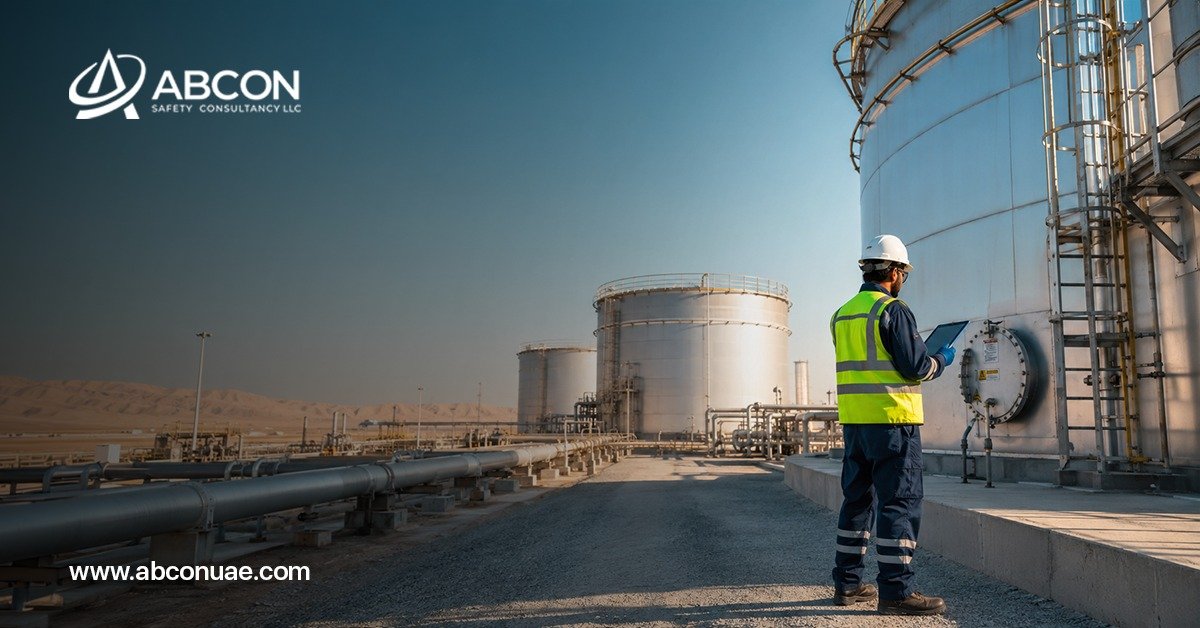
Storage Tank Inspection in UAE: Risks, Standards & When to Call an Expert
Storage tank inspection in the UAE is essential for preventing leaks, corrosion, fires, and regulatory violations. Regular inspections following standards like API 653 and ADNOC requirements help ensure safety, environmental protection, and operational reliability in the UAE’s harsh climate.
Storage tank inspection in the UAE is essential for preventing leaks, corrosion, fires, and regulatory violations. Regular inspections following standards like API 653 and ADNOC requirements help ensure safety, environmental protection, and operational reliability in the UAE’s harsh climate.
Introduction: Why Storage Tank Inspection in the UAE Is Non-Negotiable
The UAE's industrial landscape from sprawling oil refineries in Abu Dhabi to fuel depots across Dubai and Sharjah — relies heavily on above-ground and underground storage tanks. These structures hold everything from crude oil and aviation fuel to chemicals and potable water. When they fail, the consequences are severe: environmental contamination, catastrophic fires, regulatory shutdowns, and significant financial liability.
Storage tank inspection in the UAE isn't simply a box-ticking exercise. It is a legally mandated, safety-critical discipline governed by both local and international standards. Whether you operate a single diesel storage tank at a construction site or manage a network of industrial tanks at a processing facility, understanding the inspection framework and knowing when to engage a certified expert — could save your operations, your workforce, and your license to operate.
What Is Storage Tank Inspection and Why Does It Matter?
Storage tank inspection is the systematic evaluation of a tank's structural integrity, material condition, protective systems, and operational safety. It involves visual examinations, non-destructive testing (NDT), corrosion assessment, and compliance verification against applicable codes.
In the UAE's extreme climate with ambient temperatures exceeding 45°C, high humidity in coastal zones, and sandstorm exposure tanks degrade faster than in temperate regions. Thermal cycling causes material fatigue. UV exposure degrades coatings. High salt content in coastal environments like Dubai and Ras Al Khaimah accelerates external corrosion dramatically.
Without a structured tank inspection program, operators risk:
Undetected floor corrosion leading to sudden catastrophic leaks
Internal coating failure causing product contamination
Shell deformation or buckling from settlement and pressure fluctuation
Fire and explosion hazards from vapor accumulation in poorly maintained floating roof tanks
Heavy fines and facility shutdowns from regulatory non-compliance
Key Risks Associated with Uninspected Storage Tanks in the UAE
1. Corrosion and Metal Loss
Corrosion is the leading cause of storage tank failure globally, and the UAE environment accelerates it. Both internal corrosion (from product water bottoms, microbial activity, and chemical interaction) and external corrosion (from soil contact, atmospheric moisture, and industrial pollutants) reduce wall and floor thickness below safe operating limits.
2. Foundation Settlement and Structural Deformation
Sandy soils prevalent across much of the UAE can shift under load, particularly after flooding events or ground vibration. Foundation settlement causes tank floors to develop low spots where water accumulates, driving localized corrosion — often invisible without ultrasonic floor scanning.
3. Floating Roof Failures
Above-ground storage tanks (ASTs) storing volatile hydrocarbons often use floating roof designs to minimize vapor emissions. Pontoon failures, rim seal deterioration, and drain blockages are common in poorly maintained tanks and pose direct fire and environmental risks.
4. Overpressure and Vacuum Events
Inadequate vent sizing, blocked pressure/vacuum relief valves, or operational errors can cause catastrophic over-pressurization or vacuum collapse — events that destroy tanks instantaneously and endanger surrounding infrastructure.
5. Environmental and Regulatory Liability
A single leaking hydrocarbon tank can contaminate groundwater and soil, triggering liabilities under UAE Federal Law No. 24 of 1999 on the Protection and Development of the Environment. Cleanup costs and regulatory penalties far exceed the cost of regular professional inspections.
Applicable Standards for Storage Tank Inspection in the UAE
Inspections in the UAE are conducted against a combination of international codes and local regulatory requirements:
API Standards (American Petroleum Institute)
API 653 — The primary standard for above-ground storage tank inspection, repair, alteration, and reconstruction. Governs inspection intervals, minimum thickness calculations, and fitness-for-service assessments.
API 570 — Covers inspection of piping systems connected to storage tanks.
API 510 — Pressure vessel inspection code, relevant for pressurized storage vessels.
API RP 575 — Guidelines for inspection of atmospheric and low-pressure storage tanks.
ADNOC and Local Regulatory Requirements
ADNOC CoP (Code of Practice) standards apply to all facilities operating within ADNOC's supply chain in Abu Dhabi.
Dubai Civil Defence regulations mandate periodic inspection and certification of fuel storage tanks in commercial and industrial premises.
Trakhees / PCFC regulations govern tank installations in free zones including Jebel Ali and Dubai Industrial City.
EPSC (Emirates Fire Protection Safety Code) requirements apply to flammable liquid storage.
NACE / AMPP Corrosion Standards
Corrosion protection systems — cathodic protection, coatings, and linings are assessed against NACE SP0169, SP0193, and related standards widely referenced by inspection engineers across the UAE.
Types of Storage Tank Inspections
A comprehensive tank inspection program in the UAE typically involves several tiers:
Routine / Operator Inspections
Conducted by trained facility personnel on a daily or weekly basis. Covers visual checks of external surfaces, vents, gauges, valves, and bund walls. First line of defense against obvious deterioration.
In-Service Inspections
Performed by qualified inspectors while the tank remains in operation. Techniques include:
External visual inspection (EVI)
Ultrasonic thickness (UT) gauging of shell courses
Acoustic emission testing (AET) to detect active corrosion without emptying
Infrared thermography for detecting insulation failures and liquid levels
Out-of-Service (Internal) Inspections
The most thorough inspection type, requiring the tank to be emptied, cleaned, gas-freed, and ventilated. Includes:
Full internal visual examination
Magnetic flux leakage (MFL) floor scanning
Ultrasonic floor grid scanning
Weld inspection via dye penetrant (DPT) or magnetic particle testing (MPT)
Internal coating assessment and holiday testing
API 653 defines the maximum inspection intervals based on corrosion rates and service history. For most atmospheric hydrocarbon tanks in the UAE, internal inspections are required every 5 to 10 years, with shorter intervals where accelerated corrosion is detected.
Risk-Based Inspection (RBI)
Advanced facilities use Risk-Based Inspection (RBI) methodology (per API 580/581) to prioritize inspection resources based on the probability and consequence of failure. RBI programs allow operators to optimize intervals without compromising safety a growing practice among major operators in Abu Dhabi and Dubai.
When to Call a Certified Tank Inspection Expert in the UAE
Many operators delay calling in professionals, either due to cost concerns or a false sense of security from a tank that appears externally sound. Here are the clearest signals that expert storage tank inspection services in the UAE are immediately needed:
Call an expert immediately if:
Your tank has reached or exceeded its scheduled API 653 inspection interval
You have detected a leak, seepage, or unexplained product loss
There has been a significant overfill, lightning strike, or fire near the tank
Foundation cracks, bund wall damage, or abnormal settlement have been observed
Tank has been out of service for more than 12 months and is being reactivated
A regulatory authority (Civil Defence, ADNOC, Trakhees) has issued a compliance notice
You are acquiring or divesting a facility and require a baseline condition assessment
Cathodic protection readings indicate protection failure
The tank is more than 20 years old and has no documented inspection history
Certified inspection engineers in the UAE hold qualifications such as API 653 Certified Inspector, CSWIP Tank Inspector, or ASNT NDT Level II/III, and should operate under a Quality Management System compliant with ISO 9001.
The Cost of Skipping Professional Tank Inspections
To put the economics in perspective: a comprehensive internal inspection of a medium-sized AST in the UAE typically costs between AED 15,000 and AED 80,000, depending on tank size, access requirements, and testing scope.
Compare that to the cost of a tank floor replacement (AED 200,000–AED 800,000+), environmental remediation of a hydrocarbon soil spill (AED 500,000–AED 5 million+), or regulatory shutdown of a fuel distribution facility (losses of AED 50,000–AED 200,000 per day). The return on inspection investment is self-evident.
Frequently Asked Questions (FAQ)
Q: How often is storage tank inspection required in the UAE?
Inspection frequency depends on the tank type, service, and applicable standard. Under API 653, internal (out-of-service) inspections are typically required every 5–10 years, while external inspections are conducted annually. ADNOC and local Civil Defence regulations may impose additional requirements.
Q: Are storage tank inspections mandatory under UAE law?
Yes. Facilities storing hydrocarbons, chemicals, or potable water are subject to inspection requirements under UAE Federal environmental law, Abu Dhabi ADNOC standards, Dubai Civil Defence regulations, and free zone authority requirements. Non-compliance can result in fines, facility closure, and operating license revocation.
Q: What qualifications should a tank inspector in the UAE have?
Look for inspectors certified to API 653, CSWIP 3.4 (Tank Inspector), or equivalent, with demonstrated experience in UAE regulatory environments. NDT technicians should hold ASNT or PCN Level II/III certifications in applicable techniques (UT, MFL, DPT, MPT).
Q: Can tanks be inspected while still in service?
Yes. Acoustic emission testing (AET), external UT gauging, and infrared thermography can be performed in-service. However, full floor scanning and internal visual inspection require the tank to be emptied, cleaned, and gas-freed.
Q: What is RBI and does my facility need it?
Risk-Based Inspection (RBI) is an API 580/581-compliant methodology that prioritizes inspection based on failure risk. It is increasingly required by major UAE operators including ADNOC affiliates, and is recommended for any facility with multiple tanks or high-consequence service fluids.
Q: How do I find a certified tank inspection company in the UAE?
Look for companies accredited by recognized bodies (e.g., ILAC-accredited NDT labs), with proven UAE project references, and employing API 653-certified inspectors. Ensure the company carries appropriate professional indemnity and liability insurance.
Conclusion: Don't Wait for a Failure to Act
Storage tank integrity is not a matter that rewards procrastination. In the UAE's demanding environment regulatory, climatic, and operational the gap between a well-maintained tank and a catastrophic failure can narrow faster than most operators realize.
Whether you manage fuel tanks in Dubai, chemical storage in Sharjah, or crude oil ASTs in Abu Dhabi, investing in a structured, expert-led storage tank inspection program is the single most effective risk management decision you can make for your facility.