'/%3E%3Cpath d='M30 0v30M0 15h60' stroke='%23FFF' stroke-width='10'/%3E%3Cpath d='M30 0v30M0 15h60' stroke='%23C8102E' stroke-width='6'/%3E%3C/svg%3E)
Fire Warden Training UAE: Roles, Responsibilities & Civil Defence Requirements
Explains the fire warden role in UAE workplaces pre-emergency prep, evacuation duties, assembly point headcounts, and post-incident reporting. Covers general Civil Defence expectations, how many wardens a building needs, training content, a checklist, 5 FAQs, and a CTA to build a compliant program.
Explains the fire warden role in UAE workplaces pre-emergency prep, evacuation duties, assembly point headcounts, and post-incident reporting. Covers general Civil Defence expectations, how many wardens a building needs, training content, a checklist, 5 FAQs, and a CTA to build a compliant program.
Introduction
When an alarm sounds, most employees look to one person for direction: the fire warden. That's not an informal title — in the UAE, it's a defined role that Civil Defence authorities expect every commercial, industrial, and high-occupancy building to have in place, staffed by people who've actually been trained to do the job under pressure, not just handed a hi-vis vest.
Yet fire warden training is one of the most commonly under-resourced parts of UAE workplace safety programs. Businesses often designate a fire warden on paper without providing structured training, assuming basic instinct will carry someone through an actual evacuation. It won't — and Civil Defence inspections are increasingly designed to test exactly that gap.
This guide breaks down what a fire warden is actually responsible for, what UAE Civil Defence requirements expect, and how to build a fire warden program that holds up during both an audit and a real emergency.
What Is a Fire Warden?
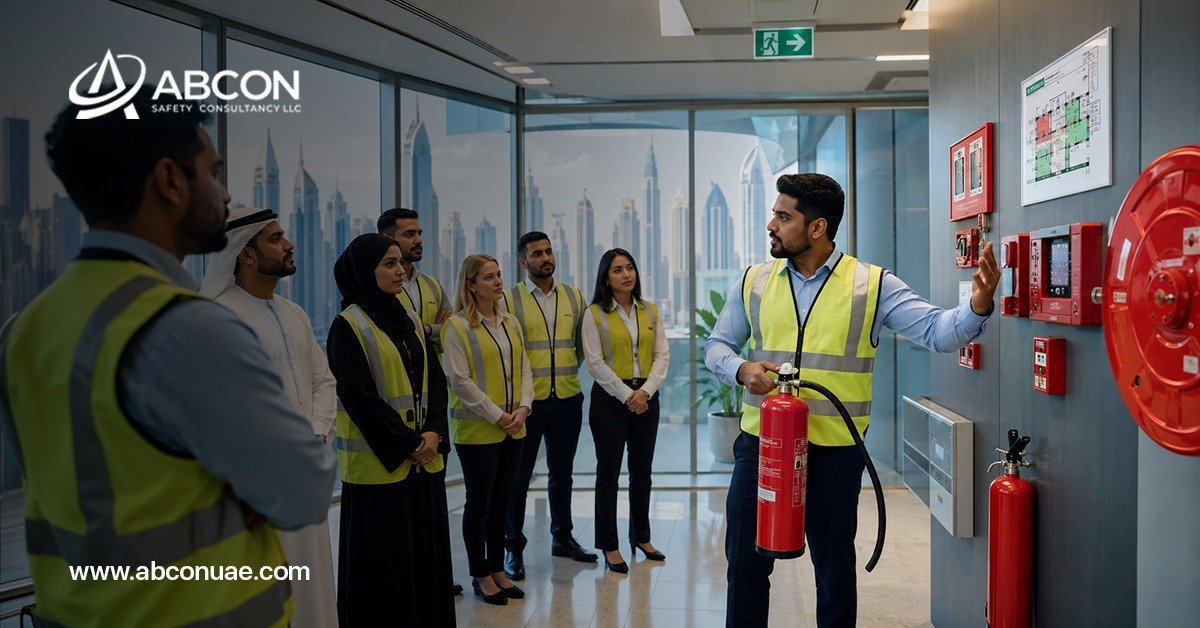
A fire warden (sometimes called a fire marshal) is a designated employee trained to take charge of fire safety response within a specific area of a building — leading evacuation, accounting for personnel, and liaising with emergency services until Civil Defence arrives on-site.
Fire wardens are not firefighters. Their role is not to fight a fire but to ensure everyone in their assigned zone evacuates safely, quickly, and in the correct order, while providing critical information to responding authorities.
Core Roles and Responsibilities of a Fire Warden
1. Pre-Emergency Preparedness
Understanding the building's fire evacuation plan and assigned zone
Knowing the location of fire alarms, extinguishers, and emergency exits within their area
Identifying and reporting fire hazards or blocked evacuation routes during routine checks
2. During an Alarm or Evacuation
Directing occupants in their zone toward the nearest safe exit, avoiding lifts
Checking assigned areas (including toilets, meeting rooms, and storage spaces) to confirm they're clear
Assisting individuals with mobility challenges or those needing additional support
Closing doors behind them where appropriate to slow fire and smoke spread
3. At the Assembly Point
Accounting for all personnel from their zone against a headcount or sign-in list
Reporting missing persons or evacuation issues immediately to the fire warden coordinator or emergency services
Preventing re-entry into the building until Civil Defence confirms it's safe
4. Post-Incident
Providing a clear, accurate briefing to Civil Defence personnel on arrival
Participating in incident debriefs to identify gaps in the evacuation process
Supporting a return to normal operations only once authorities confirm the building is safe
UAE Civil Defence Requirements for Fire Wardens
While specific requirements can vary slightly by emirate and building classification, UAE Civil Defence authorities generally expect:
A designated, adequate number of fire wardens relative to building occupancy and floor layout, ensuring every zone has assigned coverage
Documented fire warden training, not just a verbal briefing, with records available for inspection
Regular fire drills involving fire wardens in an active role, not just as observers
A current, accessible evacuation plan that fire wardens are trained to execute, including alternate routes if a primary exit is compromised
Coordination with the building's fire alarm and life safety systems, so wardens understand how alarms are triggered and communicated across zones
Civil Defence inspections frequently include direct questioning of designated fire wardens asking them to explain their zone, their responsibilities, and the evacuation procedure. A fire warden who can't answer confidently is treated as a compliance gap, regardless of whether training records exist on file.
What Fire Warden Training Should Cover
Fire behavior basics how fire spreads, and why speed of evacuation matters more than firefighting attempts
Building-specific evacuation procedures and zone responsibilities
Use of fire safety equipment relevant to their role (alarm call points, fire extinguishers for immediate small-fire response only, where applicable)
Assisting occupants with disabilities or mobility limitations during evacuation
Headcount and reporting procedures at assembly points
Communication protocols with Civil Defence and building management during an incident
Practical evacuation drills, not just classroom theory
Quality fire warden training should always include a hands-on drill component. A fire warden who has only reviewed a slide deck is meaningfully less prepared than one who has physically walked their zone, practiced a headcount, and rehearsed reporting to a coordinator.
How Many Fire Wardens Does a Building Need?
There's no single fixed number that applies everywhere the right count depends on:
Total building occupancy and floor area
Number of floors and evacuation routes
Presence of higher-risk zones (kitchens, plant rooms, storage areas)
Shift patterns, since coverage is needed whenever the building is occupied, not just during standard office hours
A general best practice is to ensure every zone or floor has at least one primary and one backup fire warden, so coverage isn't lost when someone is on leave, in a meeting, or off-site.
Best Practices Checklist for a Compliant Fire Warden Program
Designate primary and backup fire wardens for every zone and shift pattern
Provide structured, documented fire warden training not just a verbal briefing
Include hands-on evacuation drills as part of training, not classroom theory alone
Keep the evacuation plan current and ensure fire wardens are briefed on any building changes
Conduct regular fire drills with fire wardens playing an active role
Maintain training records accessible for Civil Defence inspection
Schedule refresher training periodically, and immediately after any building layout change
Frequently Asked Questions
1. Is fire warden training legally required in the UAE?
Yes, in substance. UAE Civil Defence authorities expect commercial and high-occupancy buildings to have designated, trained fire wardens as part of standard fire and life safety compliance, with documented training records available for inspection.
2. How often does fire warden training need to be refreshed?
Most UAE facilities schedule refresher training annually, with additional refreshers recommended after building layout changes, after a real incident, or if drill performance reveals gaps in a warden's readiness.
3. Can any employee become a fire warden, or are there specific requirements?
Any employee can generally be designated, but they should be reliably present during working hours, physically capable of assisting others during evacuation, and willing to take on the responsibility, alongside completing proper training.
4. What's the difference between a fire warden and a fire marshal?
In UAE practice, the terms are largely used interchangeably to describe the same role a trained employee responsible for evacuation coordination within a designated zone. Some organizations use "marshal" for a senior coordinating role overseeing multiple wardens.
5. Do fire wardens need to know how to use a fire extinguisher?
Basic fire extinguisher awareness is often included in fire warden training, but the priority is always safe evacuation first. Fire wardens are trained to only attempt extinguisher use on very small, contained fires, and never at the expense of their own safety or the evacuation timeline.
Final Thoughts: A Fire Warden Is Only as Good as Their Training
Designating a fire warden on paper satisfies nobody during an actual emergency or a Civil Defence inspection that asks direct questions. The value of the role comes entirely from proper, hands-on training that leaves your fire wardens confident and capable of leading an evacuation under real pressure, not just familiar with a slide deck.
Need your fire wardens trained to meet UAE Civil Defence requirements? Get in touch for a free consultation we'll help you build a fire warden training and drill program tailored to your building's layout, occupancy, and risk profile, so your team is ready before the alarm sounds, not after.