'/%3E%3Cpath d='M30 0v30M0 15h60' stroke='%23FFF' stroke-width='10'/%3E%3Cpath d='M30 0v30M0 15h60' stroke='%23C8102E' stroke-width='6'/%3E%3C/svg%3E)
First Aid Training in UAE: Why Every Workplace Needs a Certified Team
This blog explains why every UAE workplace needs a certified first aid team. It covers the legal requirements, the benefits of having trained staff on-site, which industries need it most, and what a first aid training program typically includes - making the case that it's not just a legal obligation but a smart investment in your people and your business.
This blog explains why every UAE workplace needs a certified first aid team. It covers the legal requirements, the benefits of having trained staff on-site, which industries need it most, and what a first aid training program typically includes - making the case that it's not just a legal obligation but a smart investment in your people and your business.
Introduction
In the UAE, where construction sites rise overnight, logistics hubs run 24/7, and corporate offices host thousands of workers, a medical emergency can happen anywhere, at any time. The gap between a cardiac arrest and a trained responder is often the difference between life and death. Yet most organizations in the Emirates still treat first aid training as a compliance checkbox rather than a life-saving investment.
This article explains why certified first aid teams are not optional in UAE workplaces, what the law requires, and how structured training programs deliver measurable returns on investment.
What Is First Aid Training And Why Does It Matter in UAE Workplaces?
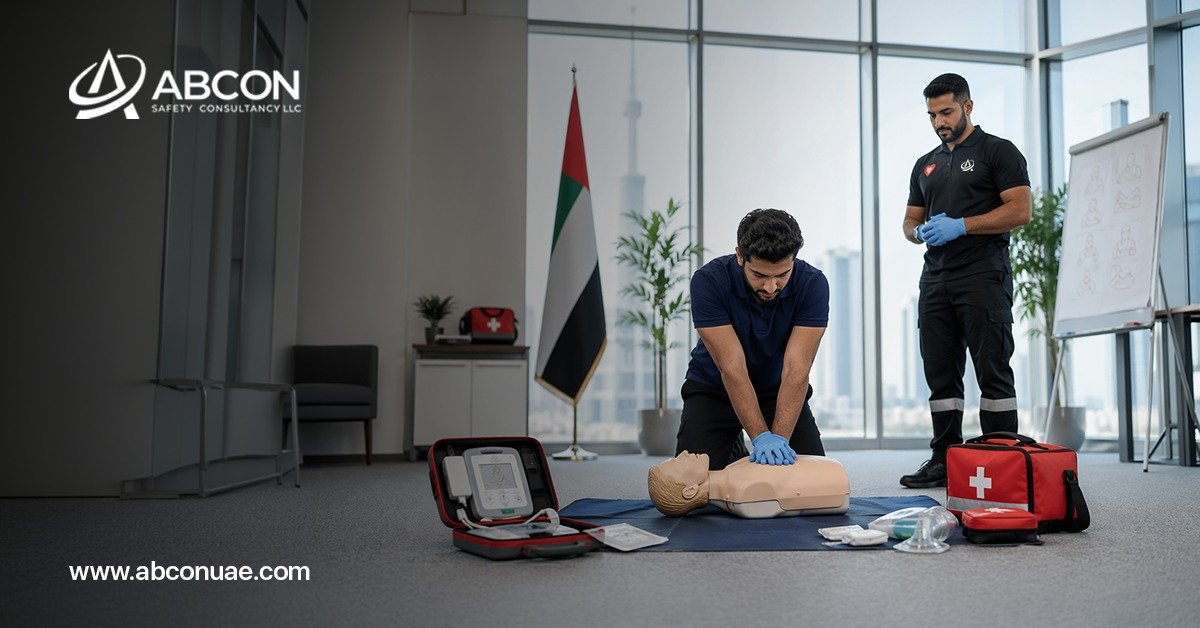
First aid training is a structured program that equips employees with the knowledge and physical skills to respond to medical emergencies before professional healthcare arrives. In the UAE context, this encompasses Basic Life Support (BLS), Cardiopulmonary Resuscitation (CPR), AED (Automated External Defibrillator) use, wound management, choking response, and heat-related illness treatment the last being especially critical given the Gulf's extreme summer temperatures.
Key Definition — Certified First Aider (UAE): An employee who holds a valid first aid certificate issued by a MOHAP-approved training provider or recognized body such as the American Heart Association (AHA), British Red Cross, or St. John Ambulance. Certification typically expires every 1–2 years and requires renewal.
UAE Legal Requirements for Workplace First Aid
The UAE has a layered regulatory framework governing occupational health and safety. Employers must understand the specific mandates applicable to their emirate and industry sector.
Regulation / Authority | Key First Aid Requirement | Applies To |
|---|---|---|
OSHAD-SF (Abu Dhabi) | Minimum 1 trained first aider per 50 employees; documented first aid plan mandatory | All Abu Dhabi private sector workplaces |
Dubai Civil Defence | Fire warden and first aid training required for buildings above a specified occupancy threshold | Commercial buildings, factories, retail |
MOHRE Labour Law (Federal) | Employers must provide a safe working environment, including emergency response capability | All UAE private sector employers |
CICPA (KIZAD/Khalifa Port) | Certified first aiders required on all shifts in industrial zones | Industrial & logistics employers |
Compliance fact: Under the Abu Dhabi Occupational Safety and Health System Framework (OSHAD-SF), failure to maintain compliant first aid provisions can result in fines exceeding AED 50,000 and operational shutdowns pending rectification.
The 6 Measurable Benefits of a Certified Workplace First Aid Team
1. Faster incident response On-site responders act within seconds. UAE ambulance ETA averages 4–6 minutes — untreated cardiac arrest causes irreversible brain damage in 4–6 minutes. A trained colleague on the floor eliminates that gap entirely.
2. Reduced severity of injuries Proper wound management, correct patient positioning, and timely AED use directly reduce injury severity and hospitalization duration, lowering the overall cost burden on both employer and employee.
3. Legal compliance and risk mitigation Certified teams demonstrate due diligence, protecting organizations from regulatory penalties, civil liability, and reputational damage following a workplace incident.
4. Lower workers' compensation costs Prompt first aid treatment reduces lost workdays by an estimated 25–30%, according to occupational health research, directly impacting insurance premiums and productivity metrics.
5. Improved employee confidence and morale Workforces trained in emergency response report higher psychological safety scores and lower anxiety around workplace accidents, contributing to stronger retention and engagement.
6. Heat illness preparedness UAE outdoor workers face extreme heat stress. Certified first aiders trained in heat stroke recognition and cooling protocols can prevent fatalities during summer months when temperatures routinely exceed 45°C.
Which Industries in the UAE Need First Aid Training Most Urgently?
While every workplace benefits from certified first aiders, certain sectors face elevated risk profiles that make training an operational necessity rather than merely a regulatory formality.
Construction and real estate: Highest incidence of workplace injuries in the UAE; falls, crush injuries, and electrocution are the leading causes of fatality.
Oil, gas and petrochemicals: Exposure to hazardous substances, fire, and explosion risk demands advanced first aid and chemical burn response training.
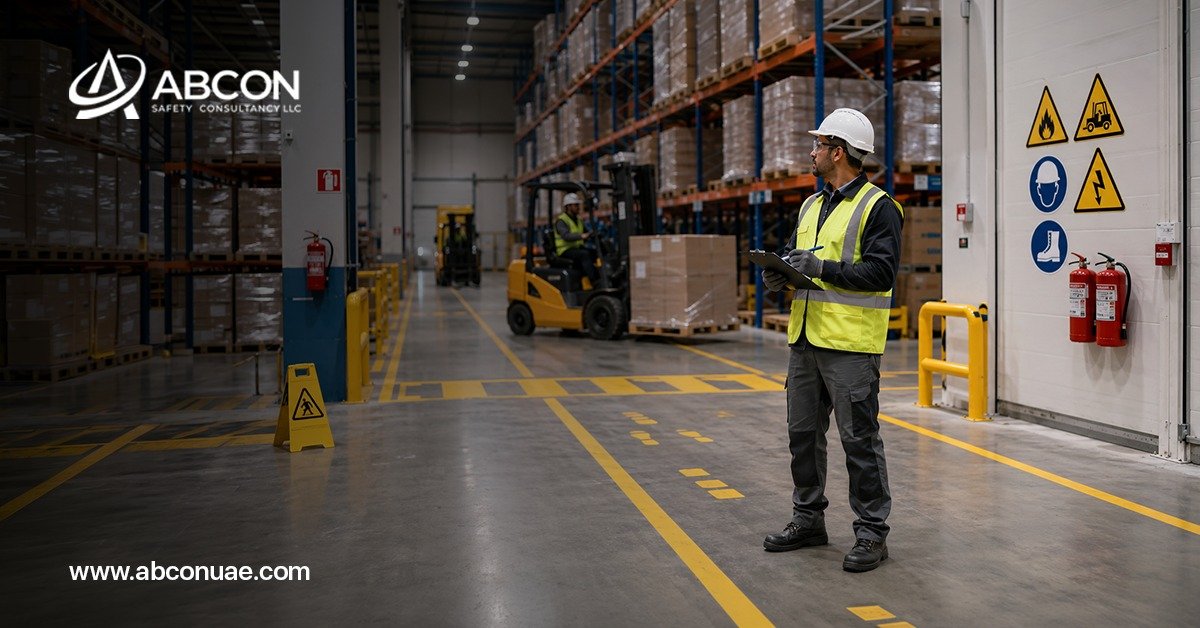
Logistics, warehousing and manufacturing: High machinery-related injury rates; shift-work patterns mean 24/7 coverage requires multiple certified responders per site.
Hospitality and retail: High foot traffic increases likelihood of cardiac events, falls, and choking incidents among both staff and visitors.
Schools and education facilities: UAE Ministry of Education guidelines recommend first aid training for all school staff responsible for student welfare.
Healthcare support services: Non-clinical staff security, facilities, catering benefit from certified training to bridge gaps before clinical teams arrive.
What Does a Certified First Aid Training Program in the UAE Include?
A compliant, high-quality first aid training course delivered by a MOHAP-recognized provider should cover the following modules, typically completed over one to three days.
Module | Topics Covered | Duration |
|---|---|---|
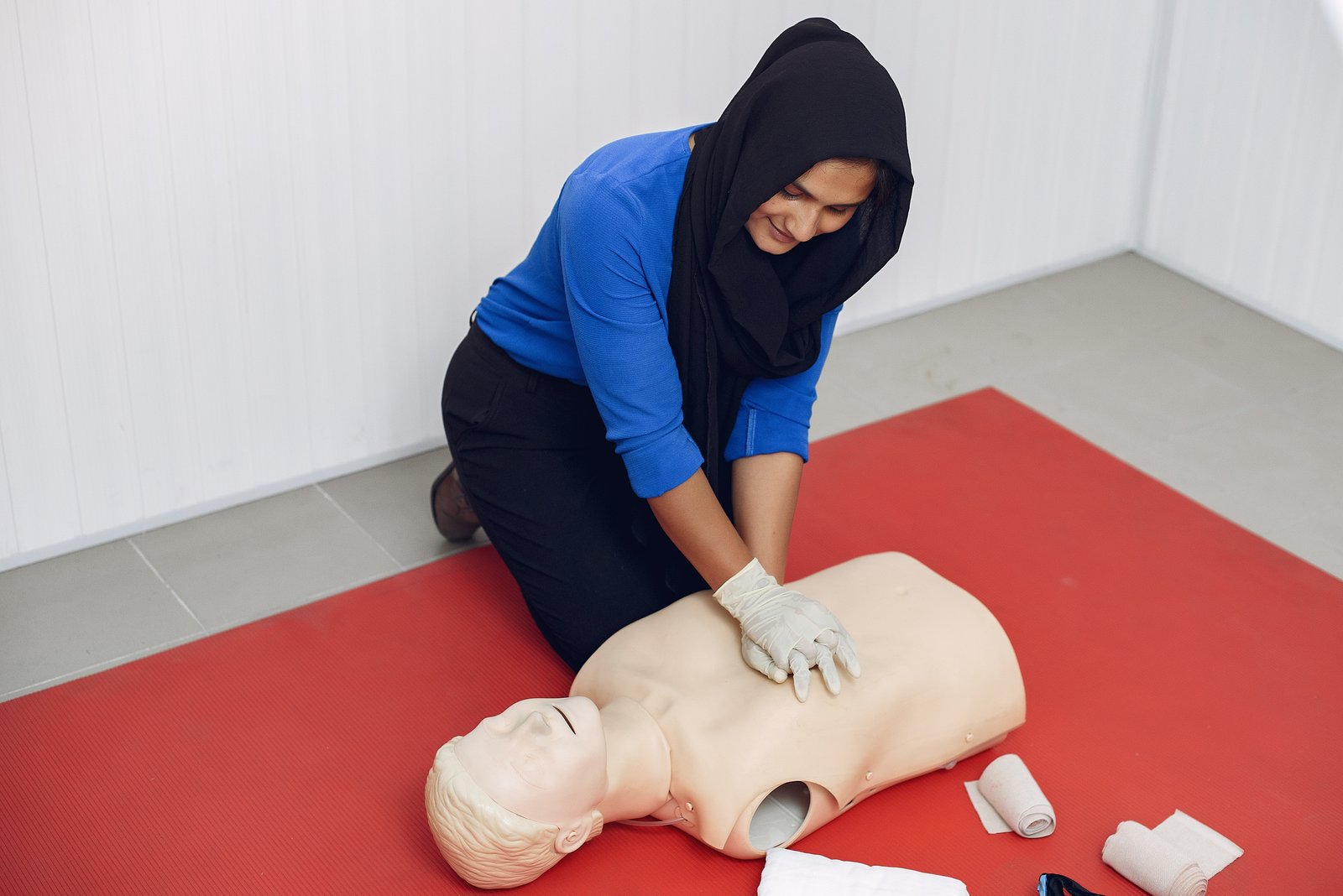
Basic Life Support (BLS) | CPR technique, rescue breathing, chain of survival | 3–4 hours |
AED Operation | Device use, pad placement, safe defibrillation protocol | 1–2 hours |
Wound and Bleeding Control | Hemorrhage control, tourniquet use, dressing application | 2 hours |
Heat and Environmental Emergencies | Heat stroke, heat exhaustion, hypothermia | 1.5 hours |
Fractures and Musculoskeletal Injuries | Immobilization, splinting, spinal precautions | 1.5 hours |
Medical Emergencies | Stroke, diabetic emergencies, anaphylaxis, seizures | 2 hours |
Frequently Asked Questions
Q: How many first aiders does a UAE company legally need?
A: Under OSHAD-SF (Abu Dhabi), a minimum of 1 certified first aider per 50 employees is required. Dubai guidelines vary by industry and building type. High-risk industries such as construction typically require higher ratios and shift-based coverage.
Q: How long is a first aid certificate valid in the UAE?
A: Most MOHAP-recognized first aid certificates are valid for 2 years. BLS/CPR certifications from providers like the AHA are also valid for 2 years. Annual refresher training is considered best practice in high-risk industries.
Q: Who are recognized first aid training providers in the UAE?
A: Recognized providers include those accredited by MOHAP, Abu Dhabi Health Services Company (SEHA), the American Heart Association (AHA), British Red Cross, St. John Ambulance, and ISO-certified occupational health training companies operating in the UAE.
Q: Can first aid training be conducted on-site at our workplace?
A: Yes. Most certified training providers offer on-site group training, which reduces operational disruption and can be customized to industry-specific hazards such as construction site scenarios or hotel guest emergency protocols.
Building a First Aid Culture: Beyond the Minimum Requirement
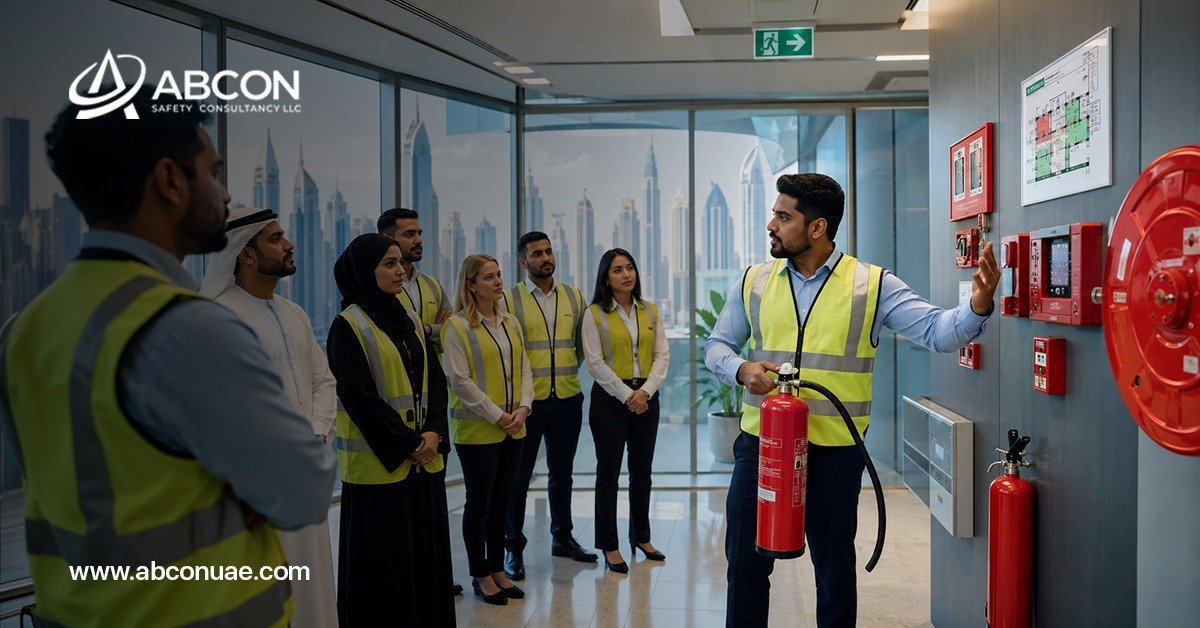
Progressive organizations in the UAE are moving beyond compliance-driven training toward building a genuine culture of workplace safety. Best-practice employers conduct quarterly emergency simulations, display emergency procedures in multiple languages given the multicultural workforce, strategically place AEDs with clear signage in high-traffic areas, and integrate first aid competency into annual performance reviews.
Benchmark data: Organizations with structured first aid programs report an average 20–35% reduction in the severity of workplace incidents, according to data from occupational health bodies including IOSH and the UK HSE metrics increasingly referenced by UAE HSE consultancies when justifying training investment to clients.
Conclusion: First Aid Training Is a Strategic Business Decision
In the UAE's fast-paced, high-density working environment, waiting for an ambulance is not a strategy. A certified first aid team is a legal obligation, a moral responsibility, and a demonstrable business asset reducing liability, protecting your workforce, and building organizational resilience.
Whether you operate a 10-person SME in a Dubai free zone or a 5,000-employee construction conglomerate in Abu Dhabi, investing in certified first aid training is one of the highest-ROI safety decisions you can make.