'/%3E%3Cpath d='M30 0v30M0 15h60' stroke='%23FFF' stroke-width='10'/%3E%3Cpath d='M30 0v30M0 15h60' stroke='%23C8102E' stroke-width='6'/%3E%3C/svg%3E)
Lifting Equipment Inspection in UAE: Complete Guide
Complete guide to lifting equipment inspection in UAE covering 5 equipment categories (cranes/hoists, slings/chains, forklifts, MEWPs, below-the-hook devices), what a 7-part inspection includes, why failure consequences are high-severity, a frequency table, EIAC accreditation, a checklist, 5 FAQs, and a CTA.
Complete guide to lifting equipment inspection in UAE covering 5 equipment categories (cranes/hoists, slings/chains, forklifts, MEWPs, below-the-hook devices), what a 7-part inspection includes, why failure consequences are high-severity, a frequency table, EIAC accreditation, a checklist, 5 FAQs, and a CTA.
Introduction
Cranes, hoists, forklifts, slings, and other lifting equipment carry some of the highest incident severity of any workplace hazard category when lifting equipment fails, the result is rarely minor. A dropped load, a snapped sling, or a crane structural failure can cause fatalities, catastrophic property damage, and project shutdowns that far exceed the cost of proper inspection.
Lifting equipment inspection in the UAE isn't optional maintenance it's a defined regulatory and insurance requirement across construction, industrial, marine, and logistics sectors. Yet many businesses only think seriously about inspection scheduling after a near-miss or a failed audit. This complete guide breaks down what lifting equipment inspection actually involves, the categories of equipment it covers, UAE compliance expectations, and how to build a defensible inspection schedule.
What Is Lifting Equipment Inspection?
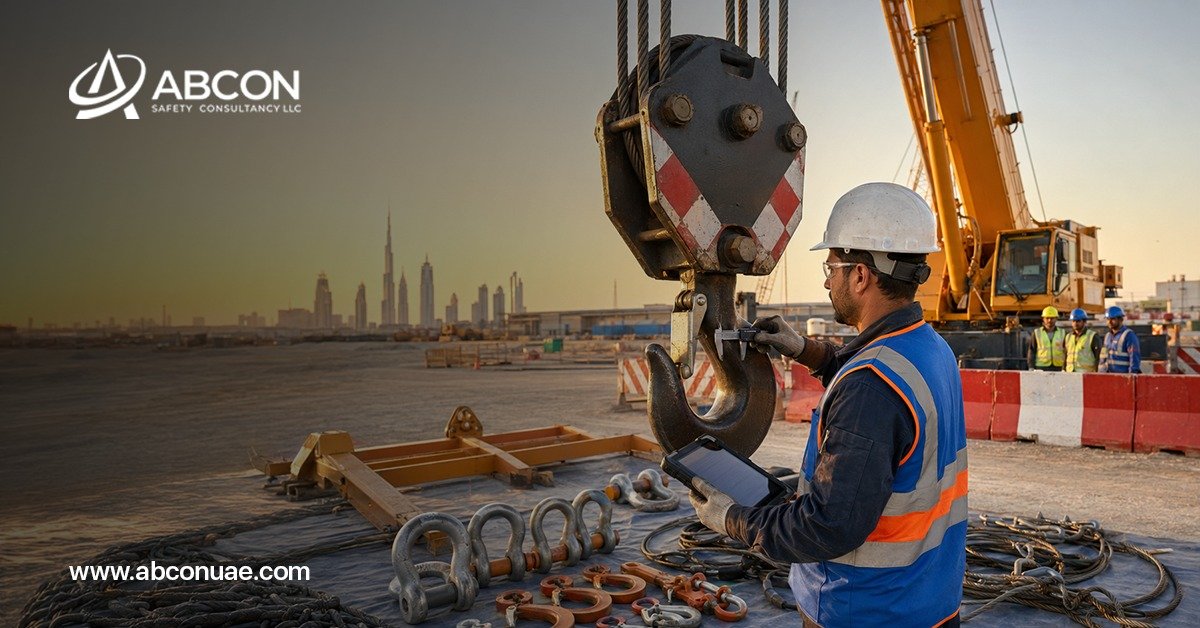
Lifting equipment inspection is a structured examination process used to verify that cranes, hoists, lifting slings, chains, shackles, forklifts, and other load-bearing equipment remain structurally sound, mechanically functional, and safe to continue operating. Inspections combine visual examination, functional testing, and, for certain equipment categories, non-destructive testing to detect defects not visible to the naked eye.
The objective is to confirm equipment performs within its rated safe working load (SWL) and that no component wire rope, hook, chain link, hydraulic system, or structural member has degraded to a point where failure risk has become unacceptable.
Categories of Lifting Equipment Requiring Inspection
Cranes and Hoists
Including tower cranes, mobile cranes, overhead gantry cranes, and chain hoists typically requiring the most comprehensive inspection regime given their load capacity and structural complexity.
Lifting Slings, Chains, and Shackles
Textile slings, wire rope slings, chain slings, and rigging hardware items that degrade through wear, corrosion, and mechanical damage, often without obvious external signs.
Forklifts and Industrial Lift Trucks
Requiring both mechanical inspection and operational safety checks, given their frequent use and direct interaction with warehouse personnel.
Man Lifts and Mobile Elevating Work Platforms (MEWPs)
Scissor lifts and boom lifts used for working at height, requiring inspection of both the lifting mechanism and fall protection systems.
Below-the-Hook Lifting Devices
Spreader beams, lifting beams, and custom lifting attachments often overlooked but subject to the same structural integrity requirements as the crane itself.
What a Professional Lifting Equipment Inspection Includes
Visual examination — checking for visible damage, deformation, corrosion, or wear across structural and load-bearing components
Functional testing — verifying that brakes, limit switches, hydraulic systems, and control mechanisms operate correctly
Load testing — for certain equipment categories and initial commissioning, confirming performance under a controlled test load
Non-destructive testing (NDT) — techniques such as magnetic particle inspection or ultrasonic testing to detect internal defects not visible externally, particularly for critical structural components
Wire rope and chain condition assessment — checking for broken wires, corrosion, elongation, and wear against defined rejection criteria
Documentation review — confirming equipment history, prior inspection records, and any modifications are properly logged
Certified inspection report — a formal report classifying findings by severity, confirming the equipment's continued safe working load rating or flagging restrictions
An inspection conducted by an EIAC-accredited safety consultancy ensures the resulting certificate is recognized by regulators, insurers, and project clients an informal internal check may catch obvious issues but won't carry equivalent standing during an audit, tender submission, or insurance claim.
Why Lifting Equipment Inspection Matters in the UAE
1. High Consequence of Failure
Lifting equipment incidents disproportionately result in fatalities and severe injuries compared to many other workplace hazard categories, making inspection one of the highest-value preventive investments a business can make.
2. Construction and Industrial Sector Density
The UAE's active construction, oil & gas, and logistics sectors mean lifting equipment is in near-constant use across the country, increasing both wear-related risk and the sheer number of lifting operations exposed to potential failure.
3. Regulatory and Insurance Requirements
UAE authorities and most commercial insurers require documented, current lifting equipment inspection certificates as a condition of continued operation and coverage, particularly for cranes and other high-capacity equipment.
4. Tender and Contract Eligibility
Many UAE construction and industrial contracts require proof of current lifting equipment certification before equipment is permitted on-site, making inspection compliance directly tied to project eligibility, not just safety.
5. Supports ISO 45001 and Broader HSE Compliance
Lifting equipment risk management ties directly into the hazard identification and control requirements of occupational safety frameworks like ISO 45001, giving safety officers a documented, auditable record for a high-severity risk category.
How Often Should Lifting Equipment Be Inspected?
Equipment Type | Recommended Frequency |
|---|---|
Cranes (tower, mobile, overhead) | Every 6–12 months, per manufacturer/regulatory guidance |
Lifting slings, chains, and shackles | Every 6–12 months, with pre-use visual checks before each lift |
Forklifts | Every 12 months, alongside routine maintenance checks |
MEWPs and man lifts | Every 6 months |
Below-the-hook lifting devices | Every 12 months, or per manufacturer guidance |
After repair, modification, or overload event | Immediately following the event, before further use |
Equipment used in high-frequency, high-load, or harsh environmental conditions should default to the more frequent end of these intervals rather than the minimum.
Best Practices Checklist Before Booking Lifting Equipment Inspection
Confirm the provider is EIAC-accredited for lifting equipment inspection and certification
Ensure inspection scope matches your equipment category (crane, sling, forklift, MEWP, etc.)
Request a certified report confirming current safe working load rating
Verify non-destructive testing is included for critical structural components where relevant
Maintain a centralized inspection and certification record for all lifting equipment on-site
Train operators to conduct daily pre-use visual checks between formal inspections
Immediately withdraw and report any equipment showing visible damage or deformation
Frequently Asked Questions
1. How often does lifting equipment need to be inspected in the UAE?
Most lifting equipment requires formal inspection every 6–12 months depending on the equipment type and usage intensity, supplemented by daily pre-use visual checks conducted by operators between formal inspections.
2. Who is qualified to inspect lifting equipment?
Lifting equipment inspection should be conducted by a competent, trained inspector, ideally from an EIAC-accredited safety consultancy, to ensure the resulting certification is recognized by regulators, insurers, and project clients.
3. What happens if lifting equipment fails inspection?
Equipment found with critical defects is typically withdrawn from service immediately and either repaired and re-inspected or permanently decommissioned, depending on the severity and nature of the defect found.
4. Does lifting equipment need inspection after every repair?
Yes any repair, modification, or suspected overload event should trigger an immediate re-inspection before the equipment returns to service, since repairs can introduce new risks if not properly verified.
5. Is lifting equipment certification required for construction site access in the UAE?
Many UAE construction projects and site authorities require proof of current, valid lifting equipment certification before equipment is permitted on-site, making inspection compliance a practical prerequisite for project participation, not just a safety measure.
Final Thoughts: Lifting Equipment Failure Doesn't Give Second Chances
Unlike many workplace hazards that develop gradually and visibly, lifting equipment failure often happens suddenly and with severe consequences which is exactly why inspection can't be treated as an occasional formality. A structured, certified inspection schedule turns invisible wear and structural degradation into a documented, manageable maintenance item, protecting both the people working around lifting operations and the project timelines that depend on equipment staying operational.
Ready to have your lifting equipment inspected and certified by an EIAC-accredited team? Get in touch for a comprehensive lifting equipment inspection tailored to your equipment type and operational demands because when it comes to lifting operations, verified safety is the only kind that counts.