'/%3E%3Cpath d='M30 0v30M0 15h60' stroke='%23FFF' stroke-width='10'/%3E%3Cpath d='M30 0v30M0 15h60' stroke='%23C8102E' stroke-width='6'/%3E%3C/svg%3E)
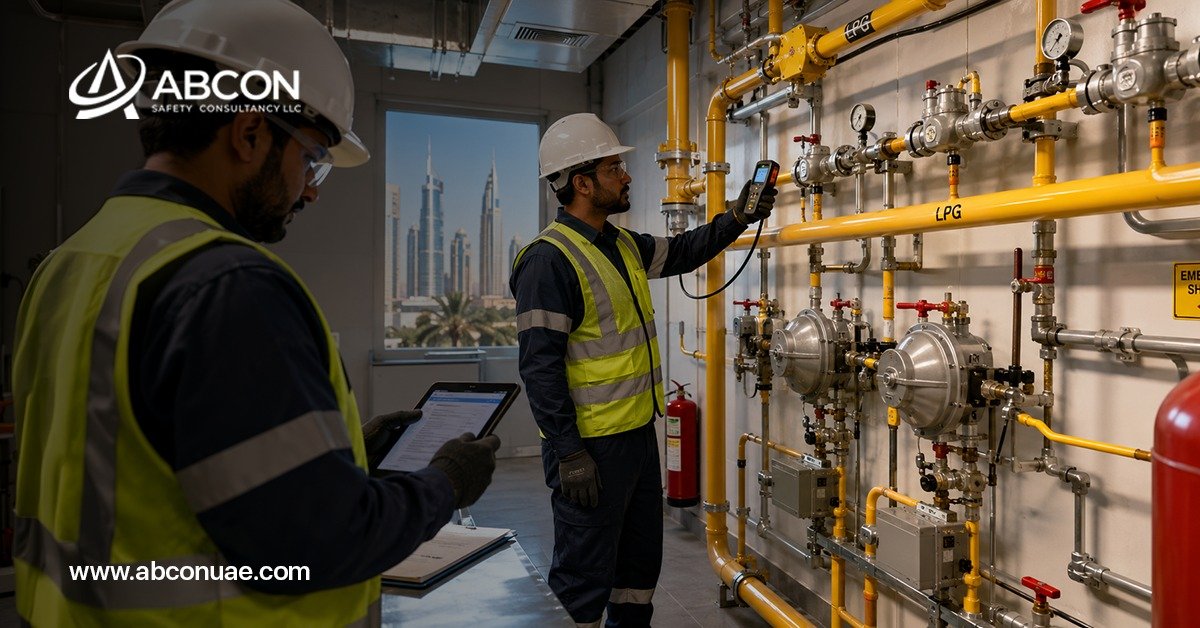
LPG Distribution System Inspection in UAE: Compliance, Safety & Certification
Explains what LPG distribution system inspection covers (storage, leak detection, piping, regulators, valves, ventilation) and why UAE commercial kitchens and industrial sites need it for Civil Defence approval and insurance compliance. Includes a recommended inspection frequency table, EIAC accreditation, a checklist, 5 FAQs, and a CTA to book a certified inspection.
Explains what LPG distribution system inspection covers (storage, leak detection, piping, regulators, valves, ventilation) and why UAE commercial kitchens and industrial sites need it for Civil Defence approval and insurance compliance. Includes a recommended inspection frequency table, EIAC accreditation, a checklist, 5 FAQs, and a CTA to book a certified inspection.
Introduction
Liquefied Petroleum Gas (LPG) powers a significant share of commercial kitchens, hospitality facilities, and industrial processes across the UAE — and it's one of the few utility systems where a maintenance oversight can escalate from a minor leak to a life-threatening incident within minutes. That's exactly why LPG distribution system inspection isn't treated as routine maintenance by UAE regulators. It's a compliance requirement tied directly to Civil Defence approval, insurance coverage, and basic occupational safety obligations.
For facility managers, restaurant owners, and industrial operators, understanding what a proper LPG inspection involves and how often it needs to happen is the difference between a documented, low-risk system and an unmanaged liability sitting behind your kitchen wall or storage yard.
This guide breaks down what LPG distribution inspection covers, the certification and compliance expectations in the UAE, and how to build a defensible inspection schedule.
What Is LPG Distribution System Inspection?
LPG distribution system inspection is a structured technical assessment of everything between an LPG storage source (cylinders, bulk tanks, or a manifold system) and the point of use (kitchen equipment, industrial burners, or process machinery). It covers the storage, piping, regulation, and delivery components that together determine whether the system operates safely under normal use and fails safely under abnormal conditions.
The objective is straightforward: confirm that gas is contained, regulated, and delivered exactly as designed, with no unmonitored leak paths or degraded components capable of triggering a fire or explosion.
Why LPG Inspection Matters in the UAE
1. LPG Incidents Escalate Fast
Unlike many electrical or structural faults that degrade gradually and visibly, an LPG leak can reach a dangerous concentration and ignite within a very short window, often with limited or no warning to occupants.
2. High-Density Commercial Kitchens Increase Exposure
The UAE's hospitality and food service sector relies heavily on LPG for commercial kitchen operations, often in high-occupancy buildings where an incident would affect far more than the kitchen itself.
3. Civil Defence Approval Is Tied to Inspection Compliance
UAE Civil Defence authorities require LPG systems in commercial premises to meet defined safety standards before granting or renewing occupancy and fire safety approvals, and documented inspection is a core part of demonstrating that compliance.
4. Insurance Coverage Frequently Depends on It
Many UAE insurers treat a current, certified LPG inspection report as a condition of coverage for premises using gas systems, and a lapsed or missing inspection can complicate or invalidate a claim following an incident.
5. Ties Into Broader Workplace HSE Compliance
LPG risk management is a core component of the hazard identification obligations found in occupational safety frameworks like ISO 45001, giving safety officers a documented record that a known high-severity risk is being actively managed.
What a Professional LPG Inspection Includes
Storage area assessment — checking cylinder or bulk tank storage for correct ventilation, separation distances, and protection from heat sources and vehicle impact
Leak detection testing — using calibrated gas detection equipment to check joints, connections, and regulators for leaks under normal operating pressure
Piping and pipework condition survey — inspecting for corrosion, physical damage, incorrect routing, or unauthorized modifications
Regulator and pressure control verification — confirming pressure regulation equipment is functioning within safe operating parameters
Valve and shut-off system checks — verifying emergency shut-off valves are accessible, correctly labeled, and functioning
Ventilation assessment — confirming gas storage and usage areas have adequate ventilation to prevent dangerous gas accumulation
Documented certification report — a formal report classifying findings by severity, with clear remedial timelines and a certification status suitable for Civil Defence or insurance submission
An inspection carried out by an EIAC-accredited safety consultancy ensures the resulting certification is recognized by Civil Defence, insurers, and auditors an informal internal check may identify obvious issues but won't carry the same regulatory standing.
How Often Should LPG Systems Be Inspected?
System Type | Recommended Frequency |
|---|---|
Commercial kitchen LPG systems | Annually, at minimum |
Bulk LPG storage and distribution systems | Annually, with more frequent checks for high-throughput sites |
Industrial LPG process systems | Bi-annually or per manufacturer/regulatory guidance |
After any system modification or repair | Immediately following the work |
Following a reported leak, odor, or alarm event | Immediately, before resuming normal use |
Facilities with high daily usage, older piping infrastructure, or previous compliance findings should default to more frequent inspection rather than the minimum interval.
Best Practices Checklist Before Booking an LPG Inspection
Confirm the provider is EIAC-accredited for LPG or gas system inspection and certification
Ensure the inspection covers storage, piping, regulators, valves, and ventilation not a partial check
Request a certification report suitable for Civil Defence submission and insurance documentation
Verify emergency shut-off valves are clearly labeled and staff know their location
Confirm follow-up verification inspection is included after any remedial work
Set a recurring annual (or more frequent) inspection schedule rather than a reactive one
Train relevant staff to recognize gas odor and respond according to an established emergency procedure
Frequently Asked Questions
1. Is LPG system inspection mandatory for UAE commercial premises?
Yes, in substance. Civil Defence authorities require commercial premises using LPG to meet defined safety standards, and a current, documented inspection is generally required to support fire safety approval and occupancy compliance.
2. How long does an LPG distribution system inspection take?
Duration depends on system size and complexity, but a standard commercial kitchen inspection typically takes a few hours, while larger bulk storage or industrial systems can take a full day or more.
3. What happens if a leak is found during an LPG inspection?
Leaks are typically classified as urgent or critical findings requiring immediate remedial action, often including isolating the affected section of the system until repairs are completed and verified by a follow-up inspection.
4. Does LPG inspection cover both cylinder-based and bulk tank systems?
Yes a proper inspection scope covers both, since the underlying safety concerns (leak risk, ventilation, regulation, storage practices) apply to cylinder-fed and bulk tank-fed systems alike, though specific checks differ by system type.
5. Is LPG inspection certification required for insurance claims in the UAE?
Many UAE insurers request evidence of a current, valid LPG inspection certificate when processing claims related to gas system incidents, making an up-to-date inspection an important part of maintaining valid coverage.
Final Thoughts: LPG Risk Doesn't Give You a Second Warning
Most safety hazards degrade slowly enough to catch through routine checks. LPG risk doesn't offer that same margin a compromised system can move from undetected fault to serious incident far faster than almost any other workplace hazard. A structured, certified inspection schedule is what stands between an unmanaged gas system and a documented, compliant one that Civil Defence, your insurer, and your own team can trust.
Ready to have your LPG distribution system inspected and certified by an EIAC-accredited team? Get in touch for a comprehensive LPG safety inspection tailored to your facility type and system size because with gas systems, prevention isn't optional, it's the entire point.