'/%3E%3Cpath d='M30 0v30M0 15h60' stroke='%23FFF' stroke-width='10'/%3E%3Cpath d='M30 0v30M0 15h60' stroke='%23C8102E' stroke-width='6'/%3E%3C/svg%3E)
Offshore Vessel Inspections in UAE: Bollard Pull Tests, Marine Certifications & More
Explains offshore vessel inspection in UAE waters covering hull/structural surveys, safety equipment checks, bollard pull testing (what it measures and why), and 5 key marine certifications (flag state, classification society, ISM, ISPS, load line). Includes an inspection frequency table, checklist, 5 FAQs, and a CTA to book an inspection.
Explains offshore vessel inspection in UAE waters covering hull/structural surveys, safety equipment checks, bollard pull testing (what it measures and why), and 5 key marine certifications (flag state, classification society, ISM, ISPS, load line). Includes an inspection frequency table, checklist, 5 FAQs, and a CTA to book an inspection.
Introduction
The UAE's offshore sector spanning oil and gas support operations, marine construction, and towage services runs on vessels that are only as reliable as their last verified inspection. A tug that hasn't had a current bollard pull test, or a vessel operating with lapsed marine certification, isn't just a compliance gap. It's a liability that can halt a charter, invalidate insurance, or put a crew at risk during a critical towing or anchor-handling operation.
Offshore vessel inspection in the UAE covers a wide range of technical verification from structural surveys to bollard pull testing to statutory marine certification and operators, charterers, and marine consultancies all need a clear picture of what's actually required before a vessel goes to work. This guide breaks down the key inspection types, what bollard pull testing verifies, and how UAE marine certification requirements fit together.
What Does Offshore Vessel Inspection Cover?
Offshore vessel inspection in the UAE typically spans several distinct but related assessment types, often bundled together for operational vessels supporting the region's energy and marine construction sectors:
Structural and hull condition surveys — assessing hull integrity, corrosion, and structural fatigue
Machinery and equipment verification — checking main engines, winches, cranes, and dynamic positioning systems where applicable
Safety equipment and life-saving appliance checks — verifying lifeboats, life rafts, firefighting systems, and emergency equipment meet statutory requirements
Bollard pull testing — verifying a tug or offshore support vessel's actual towing/pulling capability against its rated specification
Statutory and class certification review — confirming the vessel holds current, valid certificates from its flag state and classification society
Each of these serves a different purpose, but together they form the technical basis on which charterers, insurers, and regulators judge whether a vessel is fit for a specific offshore operation.
What Is Bollard Pull Testing, and Why Does It Matter?
Bollard pull testing measures the maximum static pulling force a tug or offshore support vessel can generate, typically expressed in tonnes. This isn't a theoretical figure calculated from engine specifications — it's a physically measured value, obtained by having the vessel pull against a fixed, calibrated load cell or dynamometer while operating at full power.
Why Bollard Pull Testing Is Essential
Charter Verification: Offshore towage and anchor-handling contracts are typically based on a vessel's certified bollard pull rating. Charterers rely on this figure to confirm a vessel is actually capable of the job it's being hired for.
Safety Margin Confirmation: Towing and mooring operations depend on the vessel having sufficient pulling force with an appropriate safety margin an overstated or unverified rating creates real operational risk during critical maneuvers.
Insurance and Classification Requirements: Many classification societies and insurers require current, certified bollard pull test results as part of a vessel's operational documentation, particularly for vessels engaged in specialized towage work.
Performance Degradation Detection: Engine wear, propeller fouling, or drivetrain issues can reduce actual pulling force well below rated capacity over time periodic retesting catches this degradation before it causes an operational failure mid-charter.
How Bollard Pull Testing Is Conducted
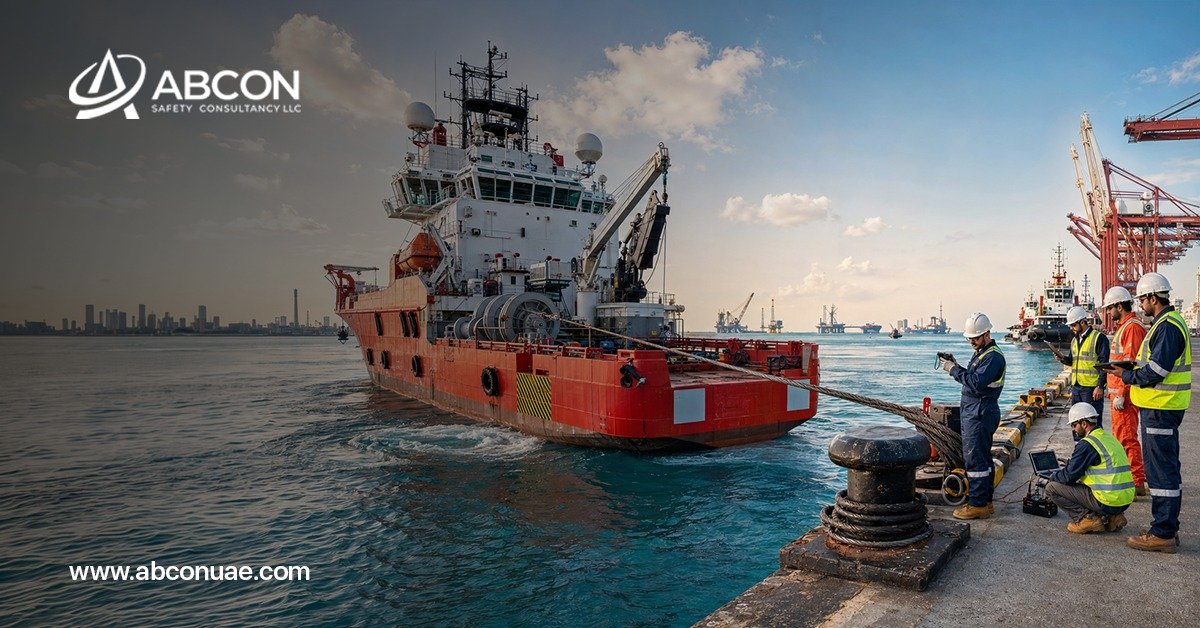
A typical bollard pull test involves securing the vessel to a fixed, calibrated bollard or load cell via towline, then running the vessel's propulsion system up to full power in a controlled, monitored environment. The load cell records the maximum sustained pulling force, which is then documented in a certified bollard pull test report the document charterers and classification societies will request before confirming a vessel for a towage assignment.
Marine Certifications Relevant to UAE Offshore Vessels
Flag State Certification
Confirms the vessel meets the statutory safety, construction, and equipment standards of its country of registration.
Classification Society Certification
Issued by recognized classification societies, confirming the vessel's structural and mechanical condition meets class rules — a requirement most insurers and charterers treat as non-negotiable.
International Safety Management (ISM) Code Compliance
Verifies the vessel and its operating company have a functioning safety management system in place, covering everything from crew procedures to emergency response planning.
International Ship and Port Facility Security (ISPS) Code Compliance
Confirms security procedures are in place to protect the vessel, crew, and cargo from security threats, a standard requirement for vessels operating in and out of UAE ports.
Load Line and Tonnage Certification
Verifies the vessel's safe loading limits and registered tonnage, both of which affect operational and regulatory compliance.
Operators working across UAE waters and free zones should confirm their vessel's certification portfolio is current and matches the specific type of offshore work being undertaken, since certification gaps are one of the most common reasons a vessel gets held at port pending verification.
How Often Should Offshore Vessels Be Inspected?
Inspection Type | Recommended Frequency |
|---|---|
Bollard pull testing | Every 3–5 years, or per classification society requirement |
Structural/hull condition survey | Annually, with intermediate and special surveys per class schedule |
Safety equipment and life-saving appliance checks | Annually, alongside statutory certificate renewal |
Machinery and dynamic positioning system checks | Annually, or per manufacturer/class guidance |
Following major repair, drydocking, or engine overhaul | Immediately after the work is completed |
Vessels engaged in demanding towage or anchor-handling operations, or those approaching a classification society survey milestone, should confirm exact intervals directly against class requirements rather than relying on general guidance alone.
Best Practices Checklist Before Booking an Offshore Vessel Inspection
Confirm the inspection provider is recognized by relevant classification societies and flag state authorities
Verify bollard pull testing is conducted using calibrated equipment with a certified report issued
Check that safety equipment and life-saving appliance certificates are current before charter commitments
Confirm ISM and ISPS compliance status ahead of any port entry or charter requirement
Schedule structural surveys in line with your classification society's survey cycle
Retest bollard pull rating periodically to catch performance degradation before it affects a charter
Maintain a centralized certification record accessible for charterer or regulatory review
Frequently Asked Questions
1. How often does a vessel need to undergo bollard pull testing?
Most classification societies and charter agreements expect bollard pull testing every 3–5 years, though some charterers request more frequent retesting for high-demand towage vessels, particularly after significant engine or drivetrain work.
2. Is bollard pull rating the same as engine horsepower?
No. Engine horsepower is a theoretical output figure, while bollard pull is a physically measured towing force that accounts for propulsion efficiency, hull design, and real-world mechanical performance two vessels with similar horsepower can have meaningfully different certified bollard pull ratings.
3. What happens if a vessel's actual bollard pull falls below its rated capacity during testing?
The vessel is typically issued a revised, lower certified rating reflecting its actual measured performance, which may affect its eligibility for certain charter contracts until the underlying mechanical issue is identified and resolved.
4. Do all offshore support vessels operating in UAE waters need the same certifications?
Not exactly required certifications vary based on vessel type, flag state, classification society, and the specific nature of the offshore work (towage, anchor-handling, construction support), so operators should confirm requirements against their vessel's specific operational profile.
5. Can bollard pull testing be conducted anywhere, or does it require specific facilities?
It requires a fixed, calibrated bollard or load cell setup capable of safely measuring high towing forces, along with a controlled testing environment meaning it's typically conducted at designated marine testing facilities or ports equipped for the purpose.
Final Thoughts: A Vessel Is Only as Reliable as Its Last Verified Rating
An offshore vessel's paperwork means little if it doesn't reflect the vessel's actual current condition and performance. Bollard pull testing and up-to-date marine certification exist precisely to close that gap turning an assumed capability into a verified, documented one that charterers, insurers, and regulators can actually rely on.
Need your vessel's bollard pull tested or your marine certifications reviewed for UAE operations? Get in touch for a comprehensive offshore vessel inspection tailored to your vessel type and operational requirements because in offshore work, verified capability is the only kind that counts.