'/%3E%3Cpath d='M30 0v30M0 15h60' stroke='%23FFF' stroke-width='10'/%3E%3Cpath d='M30 0v30M0 15h60' stroke='%23C8102E' stroke-width='6'/%3E%3C/svg%3E)
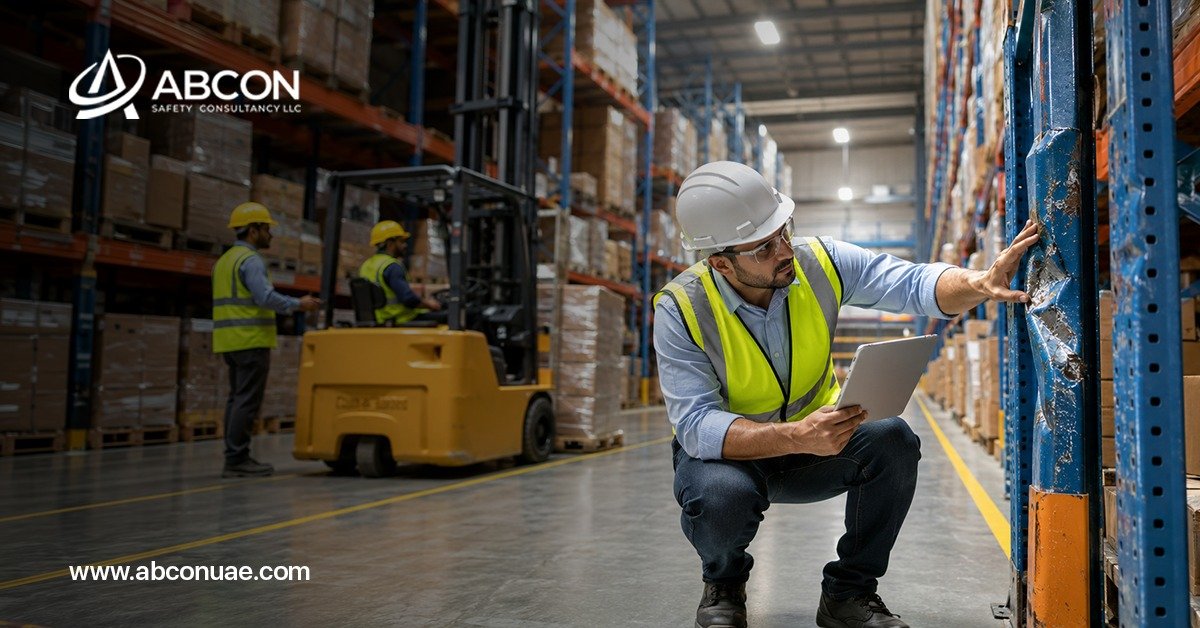
Racking System Inspection UAE: Protecting Warehouse Workers & Inventory
Explains how racking system inspection protects UAE warehouses covering the three SEMA-aligned inspection tiers, forklift/overload damage risk, what a full inspection includes, a frequency table, EIAC accreditation, a checklist, 5 FAQs, and a CTA to book an inspection
Explains how racking system inspection protects UAE warehouses covering the three SEMA-aligned inspection tiers, forklift/overload damage risk, what a full inspection includes, a frequency table, EIAC accreditation, a checklist, 5 FAQs, and a CTA to book an inspection
Introduction
A loaded warehouse racking system holds thousands of kilograms of inventory directly above the heads of workers, forklift operators, and pedestrians moving through the aisles below. When that system fails through a bent upright, a damaged beam connector, or overloading beyond its rated capacity the result isn't a minor incident. It's a collapse, and collapses in occupied warehouses cause serious injuries, fatalities, and significant inventory loss.
Racking system inspection exists to catch that damage before it becomes a failure. Yet in many UAE warehouses, racking gets treated as permanent, static infrastructure rather than equipment that degrades under daily impact from forklifts, overloading, and general wear which is exactly the assumption that leads to preventable incidents.
This guide explains what a proper racking inspection covers, how often UAE facilities should be scheduling one, and what regulators and insurers expect to see documented.
What Is Racking System Inspection?
Racking system inspection is a structured visual and technical assessment of warehouse storage racking — including uprights, beams, connectors, base plates, and floor fixings — to identify damage, wear, or non-compliance that could compromise the system's structural integrity.
Inspections are typically classified into three tiers, aligned with widely used frameworks such as those from SEMA (Storage Equipment Manufacturers' Association):
Immediate visual checks — conducted informally by warehouse staff during daily operations, flagging obvious damage for reporting
Basic/expert visual inspections — periodic checks conducted by a trained person, using a formal damage-rating system to classify severity
Full expert structural inspections — comprehensive assessments conducted by a qualified, independent inspector, typically annually, forming the primary compliance record for insurers and regulators
Why Racking Inspection Matters for UAE Warehouses
1. Forklift Impact Is the Leading Cause of Racking Damage
Daily forklift operations in busy UAE warehouses and distribution centers create constant risk of impact damage to uprights and frames damage that's often structurally significant even when it looks minor.
2. Overloading Beyond Rated Capacity
Racking systems are engineered to specific load ratings per beam level and bay. Inventory changes, seasonal stock increases, or informal storage decisions can push loads beyond what the system was designed to carry, without anyone realizing it until failure.
3. UAE's High-Volume Logistics Sector Increases Exposure
With Dubai and Abu Dhabi functioning as major regional logistics and distribution hubs, warehouse density and inventory turnover are high meaning racking systems face more frequent loading, unloading, and forklift traffic than in lower-volume markets.
4. Regulatory and Insurance Expectations
UAE civil defence authorities and warehouse insurers increasingly expect documented evidence of periodic racking inspection as part of broader workplace safety and fire/structural risk management, particularly for high-bay and automated storage facilities.
5. Ties Directly Into Broader HSE and ISO 45001 Compliance
Racking inspection feeds into the hazard identification and risk control obligations found in occupational safety management systems like ISO 45001, giving safety officers a documented, auditable record that structural storage risk is being actively managed.
What a Professional Racking Inspection Includes
Visual condition survey — checking uprights, beams, bracing, and connectors for bends, dents, cracks, or corrosion
Damage classification — rating each finding using a standardized severity scale (e.g., green/amber/red) to prioritize action
Load sign verification — confirming that load capacity signage is present, accurate, and matches current racking configuration
Base plate and floor fixing checks — verifying anchoring integrity, since a compromised base connection undermines the entire frame
Beam connector and safety clip verification — confirming locking mechanisms are intact and correctly engaged, a common point of overlooked failure
Overloading assessment — comparing actual stored loads against rated capacity for each bay and level
Documented reporting — a certified report listing findings by severity, location, and recommended timeframe for remedial action (immediate, short-term, monitor)
An inspection conducted by an EIAC-accredited safety consultancy ensures the resulting report is recognized by insurers, auditors, and regulatory bodies — an informal internal check may catch obvious damage but won't carry the same standing during a claim or compliance review.
How Often Should Racking Be Inspected?
Inspection Type | Recommended Frequency |
|---|---|
Immediate visual checks (staff-led) | Daily to weekly, as part of routine operations |
Basic/expert visual inspection | Every 3–6 months |
Full expert structural inspection | Annually, at minimum |
After any visible impact or damage | Immediately, before further loading |
High-bay or automated storage systems | More frequent expert inspection, given higher risk profile |
Following a layout change or reconfiguration | Immediately after the change is implemented |
Warehouses with heavy forklift traffic, high staff turnover, or older racking infrastructure should default to the more frequent end of these intervals.
Best Practices Checklist Before Booking a Racking Inspection
Confirm the provider is EIAC-accredited for structural/racking inspection services
Ensure inspection covers uprights, beams, connectors, base plates, and load signage — not a partial visual-only check
Request a report classifying findings by severity with clear remedial timeframes
Verify load capacity signage matches your current racking configuration
Train warehouse staff to conduct and report basic daily visual checks between formal inspections
Set a recurring annual (or more frequent) inspection schedule rather than relying on reactive checks
Immediately cordon off and report any racking bay showing visible impact damage
Frequently Asked Questions
1. How often should warehouse racking be inspected in the UAE?
Most facilities should conduct a full expert structural inspection at least annually, supplemented by more frequent basic visual inspections (every 3–6 months) and daily informal checks by warehouse staff during normal operations.
2. Who is qualified to inspect racking systems?
Full structural racking inspections should be conducted by a qualified, independent inspector trained in racking-specific damage assessment, ideally from an EIAC-accredited safety consultancy, to ensure the report carries regulatory and insurance recognition.
3. What should happen if racking damage is found during an inspection?
Findings are typically classified by severity red-rated damage requires immediate action, including removing load and restricting access to the affected bay, while lower-severity findings are scheduled for repair or ongoing monitoring.
4. Does racking inspection cover overloading, or just physical damage?
A proper inspection covers both. Physical damage assessment identifies structural issues like bent frames or damaged connectors, while a capacity review compares actual stored loads against the system's rated limits to catch overloading risk that might not be visually obvious.
5. Is racking inspection required for insurance purposes in the UAE?
Many UAE warehouse insurers expect documented evidence of periodic racking inspection as part of standard risk management, particularly for high-value inventory or high-bay storage facilities, though specific requirements vary by insurer and policy.
Final Thoughts: A Collapse Is Always Preventable Until It Isn't
Racking failures are rarely the result of a single dramatic event they're the end point of accumulated, unaddressed damage that nobody formally assessed. A structured inspection program turns that invisible, accumulating risk into a documented, scheduled maintenance item, protecting both the people working beneath the racking and the inventory stored on it.
Ready to have your warehouse racking inspected by an EIAC-accredited team? Get in touch for a comprehensive racking system inspection tailored to your facility's layout, load profile, and traffic volume because the safest warehouse is the one where risk gets caught on paper, not on the floor.