'/%3E%3Cpath d='M30 0v30M0 15h60' stroke='%23FFF' stroke-width='10'/%3E%3Cpath d='M30 0v30M0 15h60' stroke='%23C8102E' stroke-width='6'/%3E%3C/svg%3E)
Pressure Vessel Inspection in UAE: Regulations, Risks & Best Practices
Pressure vessel inspection in the UAE is a legal requirement not an option. Non-compliance means fines, shutdowns, and serious safety risks. Stay compliant with proper inspections, certified personnel, and the right training. ABCON Consultancy delivers practical Pressure Vessel Inspection training built for UAE industry.
Pressure vessel inspection in the UAE is a legal requirement not an option. Non-compliance means fines, shutdowns, and serious safety risks. Stay compliant with proper inspections, certified personnel, and the right training. ABCON Consultancy delivers practical Pressure Vessel Inspection training built for UAE industry.
Introduction: Why Pressure Vessel Inspection Is Non-Negotiable in the UAE
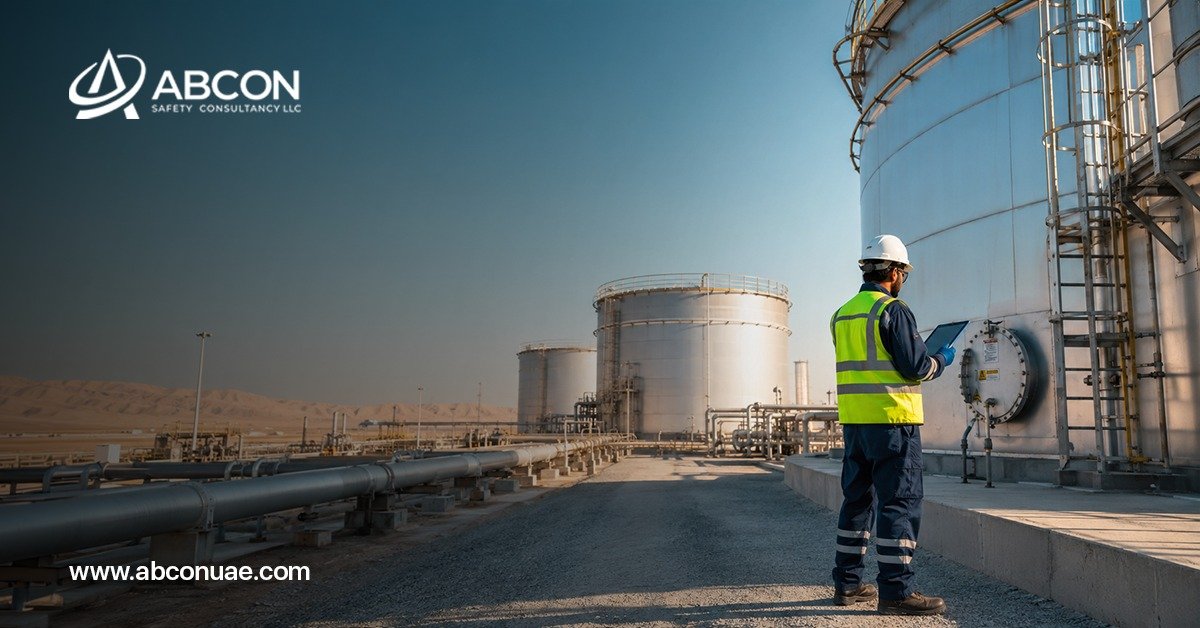
In the UAE's booming industrial and energy sectors, pressure vessel inspection is one of the most critical and most regulated safety activities on any site. From oil refineries in Abu Dhabi to manufacturing plants in Dubai and Sharjah, pressure vessels operate under extreme conditions of temperature and pressure. A single failure can result in catastrophic explosions, fatalities, costly shutdowns, and severe legal consequences.
Whether you manage a petrochemical facility, a food processing plant, or a power generation unit, understanding pressure vessel inspection regulations in the UAE is not optional it is a legal and moral obligation.
This guide covers everything you need to know: the regulatory framework, common risks, inspection best practices, and how to keep your operations compliant.
What Is a Pressure Vessel?
A pressure vessel is any closed container designed to hold gases or liquids at a pressure substantially different from ambient pressure. Common examples in UAE industrial settings include:
Boilers and steam drums
Storage tanks for compressed gases (LPG, oxygen, nitrogen)
Heat exchangers
Autoclaves
Air receivers and compressor vessels
Reactors in petrochemical plants
Given the extreme environments in which these vessels operate especially in the UAE's high-temperature climate regular and rigorous pressure vessel inspection is essential to maintaining safe, efficient operations.
Pressure Vessel Regulations in the UAE: The Legal Framework
Federal and Emirate-Level Requirements
The UAE does not operate under a single national pressure vessel code but rather a layered regulatory framework combining federal laws, emirate-specific regulations, and internationally recognized standards.
Key regulatory bodies include:
Ministry of Human Resources and Emiratisation (MOHRE) – oversees occupational safety regulations across sectors
Abu Dhabi Department of Energy (DOE) – regulates energy infrastructure including pressure systems
ADNOC (Abu Dhabi National Oil Company) – enforces its own stringent HSE standards for all contractors and operators within its ecosystem
Dubai Municipality – enforces industrial safety standards within Dubai
Trakhees / PCFC – governs safety compliance in free zones such as Jebel Ali
Internationally Recognized Standards Applied in the UAE
UAE regulators and major operators typically reference or mandate compliance with:
ASME (American Society of Mechanical Engineers) Boiler and Pressure Vessel Code (BPVC)
API 510 – Pressure Vessel Inspection Code
EN 13445 – Unfired Pressure Vessels (European standard, used in some sectors)
PED (Pressure Equipment Directive) – relevant for European-manufactured equipment
Non-compliance with these standards during inspections can result in immediate shutdown orders, heavy fines, and revocation of operating licenses.
Key Risks of Inadequate Pressure Vessel Inspection
Failing to carry out proper pressure vessel inspection in the UAE exposes companies to significant risks:
1. Catastrophic Equipment Failure
Corrosion, cracks, and weld defects if undetected can lead to sudden ruptures, explosions, or fires. The consequences are often fatal and irreversible.
2. Regulatory Penalties
UAE regulatory authorities have the power to issue stop-work orders, impose fines, and prosecute responsible individuals under occupational health and safety laws.
3. Business Interruption
An unplanned shutdown due to a failed pressure vessel can halt production for days or weeks, resulting in massive financial losses.
4. Liability and Litigation
Companies found negligent in their inspection obligations face civil lawsuits from employees, contractors, and third parties affected by incidents.
5. Reputational Damage
In the UAE's competitive industrial landscape, a safety incident tied to poor inspection practices can permanently damage a company's reputation with clients and regulators.
Pressure Vessel Inspection Best Practices in the UAE
1. Establish a Formal Inspection Program
Every facility operating pressure vessels should have a written Pressure Vessel Inspection Management Program aligned with API 510 or equivalent standards. This program should define:
Inspection intervals (internal, external, and on-stream)
Risk-Based Inspection (RBI) methodology
Responsible personnel and competency requirements
Documentation and record-keeping procedures
2. Conduct Pre-Inspection Planning
Before any inspection begins, review the vessel's history including previous inspection reports, repair records, material specifications, operating conditions, and any known anomalies. Proper planning reduces inspection time and improves accuracy.
3. Apply Risk-Based Inspection (RBI)
Risk-Based Inspection (RBI) is increasingly mandated by ADNOC and major UAE operators. RBI evaluates:
Probability of failure – based on corrosion mechanisms, material degradation, and operating history
Consequence of failure – considering safety impact, environmental damage, and business loss
RBI allows inspection intervals to be optimized — reducing unnecessary shutdowns while ensuring high-risk vessels receive closer attention.
4. Use the Right Non-Destructive Testing (NDT) Techniques
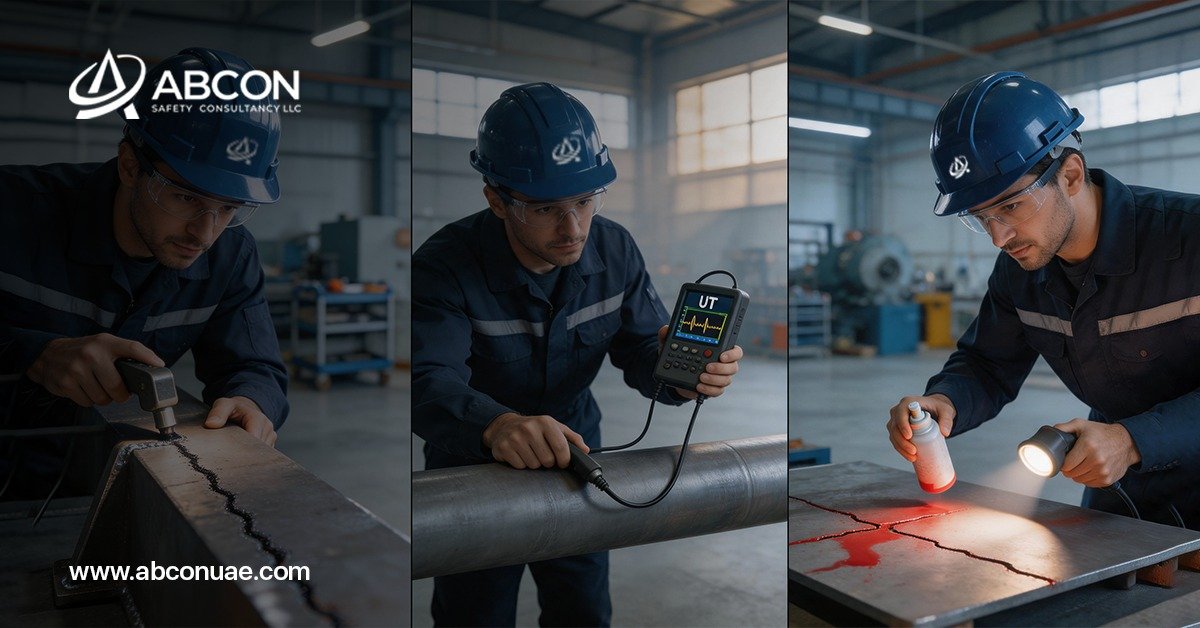
Modern pressure vessel inspection in the UAE relies on a range of NDT methods, including:
Ultrasonic Testing (UT) – measures wall thickness and detects internal flaws
Radiographic Testing (RT) – identifies weld defects and internal corrosion
Magnetic Particle Testing (MT) – detects surface and near-surface cracks in ferromagnetic materials
Liquid Penetrant Testing (PT) – reveals surface-breaking defects
Acoustic Emission Testing (AET) – monitors vessel integrity during operation
Selecting the appropriate NDT method depends on the vessel type, material, and expected degradation mechanism.
5. Follow a Comprehensive Inspection Checklist
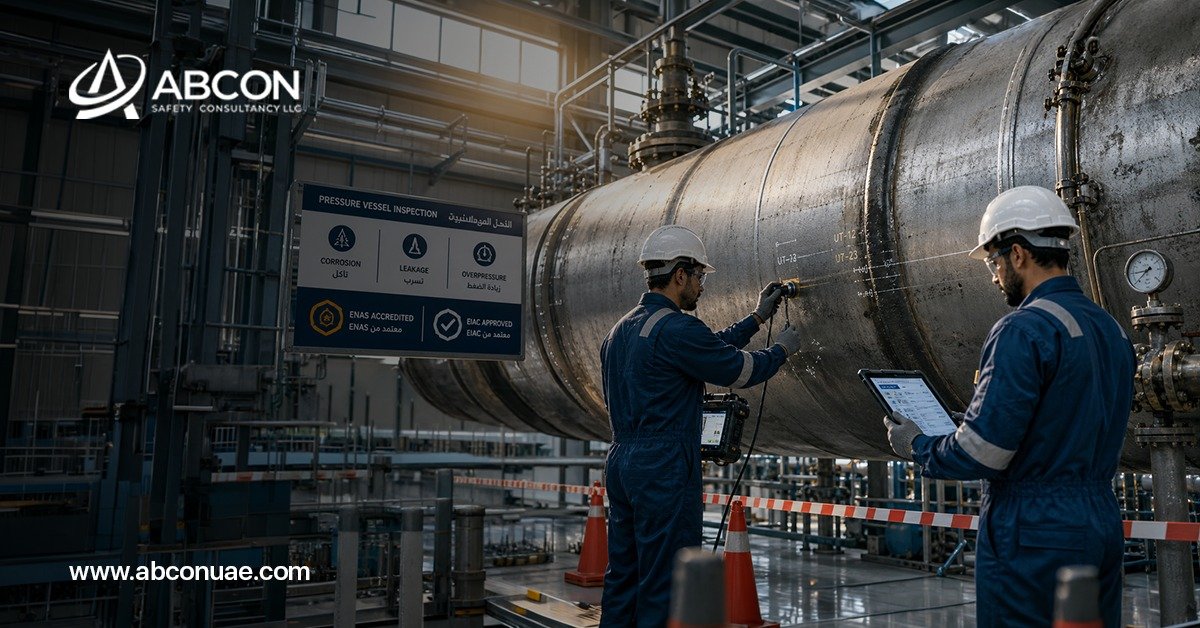
A thorough pressure vessel inspection checklist for UAE sites should include:
External visual inspection (corrosion, insulation damage, coating condition, support structures)
Internal visual inspection (pitting, crevice corrosion, weld conditions, lining integrity)
Pressure relief valve testing and calibration
Wall thickness measurement and comparison to minimum allowable
Nozzle and flange inspection
Nameplate and documentation verification
Pressure test (hydrostatic or pneumatic where applicable)
6. Ensure Proper Certification and Tagging
Following inspection, pressure vessels must be properly certified and tagged. Tagging systems should clearly indicate:
Date of last inspection
Next due inspection date
Inspector's certification details
Current operational status (safe / conditional / out of service)
This is particularly important for regulatory audits by ADNOC, Dubai Municipality, or Trakhees inspectors.
7. Maintain Detailed Inspection Records
Documentation is a cornerstone of pressure vessel compliance in the UAE. Maintain comprehensive records including inspection reports, NDT results, thickness readings, repair history, and certificates of conformity. Digital Inspection Management Systems (IMS) are increasingly used across UAE facilities to streamline record-keeping and audit readiness.
Pressure Vessel Inspector Competency: Why Training Matters
The quality of a pressure vessel inspection is only as good as the competency of the inspector conducting it. In the UAE, inspectors are expected to hold recognized qualifications such as:
API 510 Pressure Vessel Inspector Certification
CSWIP or PCN NDT Certifications
ASNT NDT Level II or III
Beyond certifications, practical HSE training in pressure vessel inspection equips site personnel with the skills to apply inspection procedures correctly, identify defects, use inspection checklists effectively, and respond to findings appropriately. ABCON Consultancy delivers specialized Pressure Vessel Inspection training designed for UAE industrial environments, combining regulatory knowledge with hands-on practical application.
FAQ: Pressure Vessel Inspection in the UAE
Q1: How often should pressure vessels be inspected in the UAE?
Inspection frequency depends on the vessel type, operating conditions, and risk classification. Under API 510 and RBI methodologies, external inspections typically occur every 5 years and internal inspections every 10 years though high-risk vessels may require more frequent checks.
Q2: Who is authorized to inspect pressure vessels in the UAE?
Inspections must be conducted by competent persons holding recognized certifications (e.g., API 510). In regulated environments like ADNOC facilities or Trakhees free zones, third-party certified inspection bodies are often required.
Q3: What happens if a pressure vessel fails an inspection in the UAE?
The vessel must be taken out of service immediately. Depending on the finding, it may be repaired, re-rated, or decommissioned. A follow-up inspection is required before return to service, and regulatory authorities must be notified if the failure posed a safety risk.
Q4: Is ASME certification mandatory for pressure vessels in the UAE?
While the UAE does not have a single national code, ASME BPVC is widely recognized and referenced by UAE regulators and major operators including ADNOC. Vessels manufactured and operated to ASME standards are generally accepted.
Q5: What are the consequences of operating a non-compliant pressure vessel in the UAE?
Consequences include stop-work orders, substantial fines, criminal liability for responsible managers, and permanent damage to operating licenses and company reputation.
Q6: Can pressure vessel inspection be conducted while the vessel is in operation?
Yes on-stream inspection using techniques such as External Ultrasonic Testing and Acoustic Emission Testing allows assessment without shutdown. However, internal inspections require the vessel to be safely isolated and prepared.
Take the Next Step: Invest in Pressure Vessel Inspection Training
Ensuring your team has the right knowledge and skills for pressure vessel inspection in the UAE is one of the most valuable investments you can make in site safety and regulatory compliance.
ABCON Consultancy offers industry-leading HSE training programs including:
✅ Pressure Vessel Inspection (API 510 aligned)
✅ Scaffolding Inspector Training
✅ Electrical Safety & LOTO Procedures
✅ Welding Safety
✅ Risk Assessment & Permit to Work
Our courses are practical, UAE-regulation focused, and delivered by experienced industry professionals.